
Blog
22 Ancient Stone Circles to Visit This Winter Solstice
17/12/2025
The winter solstice – a winter tradition dating back thousands of years will be upon us again on the 21st December 2025. ‘Solstice’ comes from Latin ‘Sol’ (Sun) and ‘sistere’ (to stand still). The winter solstice is a moment where the sun appears to stand still while appearing directly overhead the Tropic of Capricorn. In 2025, the solstice will occur at 3:03 pm, leaving the Northern Hemisphere with less sunlight, making this the shortest day of the year. This day marks the first day of winter in the astronomical calendar, and for many around the world, it is an opportunity for humans to align with the rhythms of nature and find a deeper connection with the natural world.
There are many ways you can quietly welcome the winter solstice; however, one of the most magical is to spend time observing this moment in nature. For millennia, humans have observed this day at different prehistoric sites, which are scattered mysteriously across England, Wales, Scotland, Ireland and the rest of the world. With Pinterest predicting 'Mystic Outlands' as a key trend for 2026 – celebrating ancient sites, folklore, and connecting with mystical landscapes, there's never been a better time to explore these atmospheric spaces.
To help get you inspired for 21st December, we’ve rounded up 22 sites you can visit here in the UK, using data to rank uncovered hidden gems right through to the most popular.
The Stone Circles ranking
|
Rank |
Stone Circle |
Region |
County |
Hidden Gem Score |
|
1 |
Gors Fawr Stone Circle |
Wales |
Pembrokeshire |
0.00010000 |
|
2 |
Bryn Cader Faner |
Wales |
Gwynedd |
0.00030000 |
|
3 |
Druid’s Circle |
Wales |
Conwy |
0.00100000 |
|
4 |
Scorhill Stone Circle |
England |
Devon |
0.00160000 |
|
5 |
Ballynoe Stone Circle |
Northern Ireland |
County Down |
0.00290000 |
|
6 |
Mitchell's Fold Stone Circle |
England |
Shropshire |
0.00370000 |
|
7 |
Beaghmore Stone Circles |
Northern Ireland |
County Tyrone |
0.00390000 |
|
8 |
Machrie Moor Stone Circles |
Scotland |
North Ayrshire |
0.00420000 |
|
9 |
Duddo Five Stones |
England |
Northumberland |
0.00690000 |
|
10 |
Long Meg and Her Daughters |
England |
Cumbria |
0.00860000 |
|
11 |
Kenmare Stone Circle |
Republic of Ireland |
County Kerry |
0.009 |
|
12 |
The Merry Maidens Stone Circle |
England |
Cornwall |
0.01250000 |
|
13 |
Drombeg Stone Circle |
Republic of Ireland |
County Cork |
0.01400000 |
|
14 |
Stones of Stenness Circle and Henge |
Scotland |
Orkney |
0.01650000 |
|
15 |
Swinside Stone Circle |
England |
Cumbria |
0.01950000 |
|
16 |
Clava Cairns and Stone Circles |
Scotland |
Highlands |
0.02760000 |
|
17 |
Calanais Standing Stones |
Scotland |
Outer Hebridies |
0.03430000 |
|
18 |
Ring of Brodgar |
Scotland |
Orkney |
0.03450000 |
|
19 |
The Rollright Stones |
England |
Oxfordshire |
0.03820000 |
|
20 |
Castlerigg Stone Circle |
England |
Cumbria |
0.05440000 |
|
21 |
Avebury Stone Circle |
England |
Wiltshire |
0.06060000 |
|
22 |
Stonehenge |
England |
Wiltshire |
1.00000000 |
Gors Fawr Stone Circle, Pembrokeshire
Ranking as number one in our list is Gors Fawr Stone Circle which can be found in Pembrokeshire, Wales. 16 stones make up Gors Fawr ranging in height from 0.3m to 1.1m. Gors Fawr translates to ‘great wasteland’ or ‘marsh’, and was likely constructed in the late Neolithic or early Bronze Age. Eight of the stones are Blue Dolerite, the same type of natural stone as those used at Stonehenge.
Gors Fawr is conveniently located a very short walk from the roadside, is free to enter and open 24/7. The ground around the circles can get rather boggy, so do ensure to wear appropriate footwear.
Bryn Cader Faner, Gwynedd
Coming in at number two is Bryn Cader Faner which can be found in Gwynedd, Wales. Thought to be from the Bronze Age, Bryn Cader Faner stands out as being an unusual prehistoric site to visit. The dramatic stone circle slopes outwards like a crown of thorns and is situated on a remote moorland looking up to Snowdonia.
Said to be one of the most visually appealing circles in the entire British Isles, Bryn Cader Faner is certainly a hidden gem, and one to add to your bucket list for places to quietly welcome the winter solstice this year.
Druid’s Circle, Conway
Known as the Cefn Coch, or Druids’ Circle, this site is one of several built near a prehistoric track by people of the Bronze Age approximately 4,000 years ago. The ring is made up of around 30 stones, and if you visit before sunrise, you might just be treated to a breathtaking view of the stars and Milky Way.
Scorhill Stone Circle, Devon
‘Scorhill Stone Circle’ is the common name for ‘Gidleigh Stone Circle’ or ‘Steep Hill Stone Circle’ – one of Devon’s most intact stone circles you can still visit today. It can be found on Scorhill Down, northeast on Dartmoor, and is a popular walking route. The circle itself is around 27 meters in diameter, and has 23 standing stones, the tallest measuring to 2.5 meters above ground.
Ballynoe Stone Circle, County Down
Many stone circles are spread across Northern Ireland, however, Ballynoe Stone Circle has stood out to us for being a large and complex site made of 50 closely spaced upright stones. The stones of the outer circle are nearly all composed of local Silurian grit. The circle was likely built in the late Neolithic to early Bronze Age, with some suggesting it is a counterpart to the stone circle in Swinside, Cumbria.
Mitchell's Fold Stone Circle, Shropshire
Mitchell’s Fold – sometimes called Medgel’s Fold or Madges Pinfold is located from Shropshire and is a Bronze Age stone circle. Today, you will find 15 stones but there may have once been up to 30. The site sits high in the Shropshire hills, 1000 feet above sea level and close to the Welsh border. Erected almost 4,000 years ago, the monument regularly attracts visitors who welcome the solstice.
Beaghmore Stone Circles, County Tyrone
Beaghmore (Bheitheach Mhór), meaning ‘big place of birch trees’, is located in County Tyrone, Northern Ireland. This stunning Bronze Age site was only discovered in the 1940s, and many questions about the stones still unanswered today. The stones are located in Northern Ireland’s only Dark Sky Park, so expect breathtaking views of the night’s sky above before the sun rises.
Machrie Moor Stone Circles, North Ayrshire
Machrie Moor Stone Circles comprises six stone circles scattered across the moorland on the Isle of Arran, Scotland. Dating back to Neolithic times, these standing stones were recently highlighted by VisitScotland as an excellent spot for the summer solstice – and with the right clothing and a flask of something hot, they're just as special in winter. Bundle up, take in the wild Scottish landscape, and reconnect with nature as you welcome the shortest day of the year.
Duddo Five Stones, Northumberland
Nestled in the magnificent countryside of Northumberland is the Duddo Five Stones. With views from all directions, the Duddo Five Stones is a beautiful site to visit this solstice. The stones stand around 5 – 10 feet tall and date back to around 2000 BC. Originally made up of four stones, the fifth was erected in 1903. Today, the stones continue to captivate visitors, who can enjoy the views and enter through an accessible scenic footpath.
Our Riverside Wooler Holiday Park is just a short drive from the Duddo Five Stones, the ideal base if you are planning a visit to mark the winter solstice.
Long Meg and Her Daughters, Cumbria
Long Meg and Her Daughters is a Neolithic stone circle located northeast of Penrith in Cumbria. With a diameter of approximately 350 feet, it's the largest stone circle in Cumbria and the sixth largest in England. The poet William Wordsworth, who visited the site, famously wrote: "I must say, I have not seen any other relique of those dark ages which can pretend to rival it in singularity and dignity of appearance."
Kenmare Stone Circle, County Kerry
Kenmare Stone Circle is the largest in South West Ireland. Composed of 15 heavy boulders, the circle is egg shaped, which is unlike any other ring in Munster. Known to locals as ‘The Shrubberies’, the circle lies in the town of Kenmare and can be difficult to find if you haven’t visited before. Make sure to wear appropriate footwear and wrap up warm if you pay Kenmare Stone Circle a visit on the 21st.
The Merry Maidens Stone Circle, Cornwall
The Merry Maidens are the most well-known, most accessible and most visited of stone circles in the western area of Cornwall. Also known as the ‘Dawn’s Men’, the circle is a late Neolithic site located two miles to the south of the village of St Buryan. According to folklore, the stones were once 19 maidens who turned to stone for the crime of dancing on a Sunday. There is a small parking area by the field of the south of the circle. Once you have parked, you can access the site via a stile and a short walk across the field.
Drombeg Stone Circle, County Cork
Located in County Cork, Drombeg Stone Circle is made up of 17 standing stones which on excavation, showed there to be an urn burial in the centre. Protected by National Monuments Act, Drombeg is one of the most visited megalithic sites in Ireland. Be sure to keep an eye out for the setting sun on the winter solstice, as it aligns perfectly with the rocks.
Stones of Stenness Circle and Henge, Orkney
The Stone of Stenness is said to be the earliest henge monument in the British Isles, dating back to 5,400 years ago. The site can be found five miles northeast of Stromness on the mainland of Orkney, and was originally made up of 12 stones, with some standing up to six meters high. Just four of the stones remain standing, however they still show the importance of the area. Throughout the year, you can join free guided walks should you not be able to pay the site a visit on the 21st December.
Swinside Stone Circle, Cumbria
This stunning stone circle is said to be one of the three most important stone circles in Cumbria, made up of 55 stones. The circle itself is located on private property; however, it can be easily viewed by the nearby public footpath. Known originally as ‘Sunkenkirk’, the circle dates back to the bronze age and is one of the best preserved in the country.
Clava Cairns and Stone Circles, The Highlands
The Clava Cairns can be found in the Scottish Highlands, near Inverness. The site is a remarkable example of a Bronze Age burial site and stone circle and aligns with important astronomical events including the winter solstice, demonstrating the advanced knowledge of its builders.
Since the launch of the series the ‘Outlander’, the site has seen thousands of global visitors who have travelled to take photos by the stones where the character Claire Randall is transported back in time, with some dubbing this the ‘Outlander effect.’
Calanais Standing Stones, Outer Hebrides
For thousands of years, the Calanais Standing Stones have attracted visitors. Erected in the late Neolithic era, the stones predate Stonehenge and the Pyramids of Egypt, making them approximately 5,000 years old. The stones reach almost five metres high and while there is no direct answer as to why they were built, the best guess is that it was for an astronomical observatory.
The site is currently open for visitors, however, do be aware that the visitor centre is currently closed until 2026 for redevelopment.
Ring of Brodgar, Orkney
The Ring of Brodgar is a stone circle of 140 meters in diameter and is part of the UNESCO World Heritage Site known as the Heart of Neolithic Orkney, which is a series of important ritual monuments built 5,000 years ago on the Orkney Islands. The circle was organically made up of 60 stones, with 36 still standing today.
The site is known as an archaeological treasure and is one of the Island’s most visited attractions.
The Rollright Stones, Oxfordshire
The Rollright Stones are a complex of three Neolithic and Bronze Age monuments located in Oxfordshire. The three sites are just a short walk from one another and are known as the King's Men stone circle; the Whispering Knights burial chamber; and the single King Stone. The three monuments were likely constructed at different times, perhaps from as early as 3800BC to as late as 1800BC.
Castlerigg Stone Circle, Cumbria
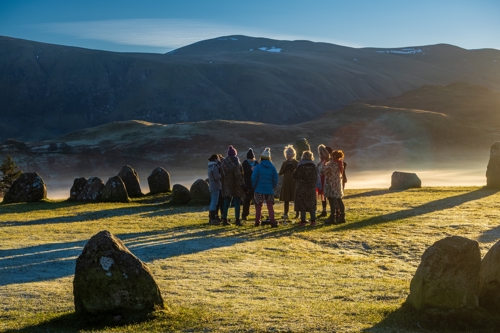
Castlerigg Stone Circle is nestled among a ring of mountains in Keswick, the Lake District. With breathtaking views of the dramatic landscape, Castlerigg is certainly a site to visit for the winter solstice. The monument is made up of 38 standing stones and was likely built 4,500 years ago. Today, the site attracts visitors who celebrate both the winter and summer solstice. Parking is available close by; however, it can fill up quickly.
Avebury Stone Circle, Wiltshire
It is said Avebury Henge was built around 4,600 years ago. Recognised as a World Heritage Site, this stunning monument shows today the traces of our ancient past. The site is located just 38km from its famous cousin, Stonehenge, and is larger and older by 800 years. The entire henge surrounds the village of Avebury, and it attracts visitors far and wide for both the winter and summer solstice.
Stonehenge, Wiltshire
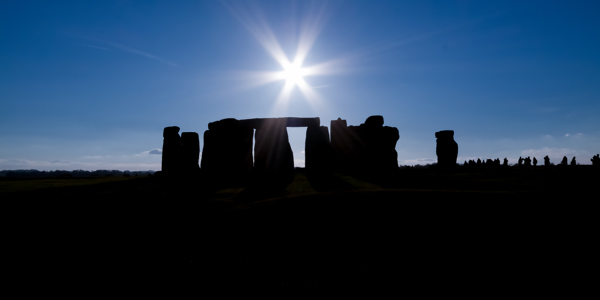
The final monument on our list is Wiltshire’s Stonehenge. The construction of this breath-taking monument began c3100 BC, and the site was worked on for 1,500 years. Today, it is still a mystery how the heavy stones made it to the site, however, we do know that the stones were constructed with a sophisticated knowledge of mathematics and geometry, as they align with the rising sun for the summer solstice and sunset for winter.
For thousands of years, this site has silently marked the winter solstice and today, it still draws thousands of visitors, seeing 4,500 people for the winter solstice in 2024.
This event is very popular, so be sure to check out information from English Heritage which details conditions of entry, travel and road closures.
Verdant Park’s CEO, Mike Wilmot, shares his thoughts on this research:
“The winter solstice is a powerful moment, and one which is wonderful to explore at these prehistoric sites in nature. There's something quite grounding about this day, as we recognise winter and the return of the light. These stone circles sit in some of the most beautiful, unspoilt landscapes in the UK. And when you pay them a visit, you're not just visiting an ancient monument, you're stepping into an environment that's barely changed in millennia.”
Methodology
Verdant Parks compiled a list of stone circles across England, Wales, Scotland, Northern Ireland and the Republic of Ireland. To determine each site's popularity, we analysed social media hashtag data and search trend volumes. Based on this data, each stone circle was assigned a 'hidden gem score' and ranked from 1 to 22, with 1 representing the most hidden gem (least popular/least visited) and 22 being the most well-known.
Get in touch
Our friendly team are waiting to hear from you. Check out our office hours or use the contact buttons below
For any press, media or influencer enquiries, you can contact us by email click here

