
Blog
23 wonderful places to spot red squirrels in 2026
23/12/2025
January might feel like a month to hibernate after the busy festive season, but taking some time to wander in nature can do wonders for your wellbeing, arguably even more so in the quieter months of winter. A recent 2025 study from the University of Kent, supported by The Woodland Trust, found that spending time in nature boosts mental health regardless of the season. Even on chilly, shorter days, a long walk through the woods can lift your mood just as effectively as a sunny summer stroll. The research highlights simple joys that make woodland walks so restorative - the crunch of leaves underfoot, the song of a robin at dawn, or the thrill of spotting a squirrel darting up a tree.
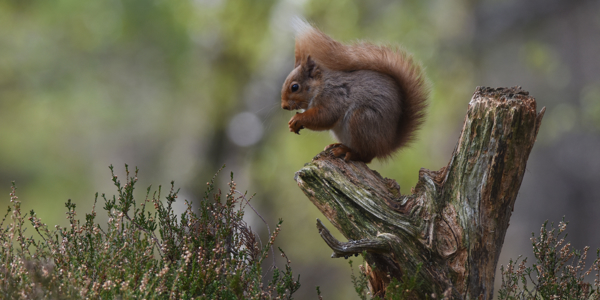
While January may not be the most active month to spot local wildlife, it is a busy month for one of our most enchanting mammals – the red squirrel. Unlike other species, red squirrels do not hibernate in winter and January is when the mating season begins, so you may just spot them jumping from tree to tree.
Unfortunately, these majestic beings are still classified as endangered in England and near threatened in Scotland by the Mammal Society, due to the invasion of the non-native grey squirrel. Despite this, scattered across Scotland and Northern England there are still many wonderful places you can visit to try and spot a glance of our furry friends.
To help you decide on where to go, we’ve created our ‘Red Squirrel Spotting Index’, where we have ranked 23 red squirrel hot spots based on sightings, access to amenities and transport - because if you’re comfortable and can get there, we know you are more likely to go.
You might notice that some locations appear in the same rank, which is due to having the same RSSI score. If you are lucky enough to catch a glimpse at one of these locations, be sure to let us know by tagging us on social with the hashtag #RedSquirrelVerdantParks.
The Red Squirrel Spotting Index
| Rank | Location | Area | Region | Red Squirrel Spotting Index Score (RSSI) |
|---|---|---|---|---|
| 1 | Argaty Red Kite Centre | Perthshire | Scotland | 57 |
| 2 | Moncreiffe Hill | Perthshire | Scotland | 55 |
| 3 | Drumlanrig Castle and Country Estate | Dumfries and Galloway | Scotland | 51 |
| 4 | Knock of Crieff | Perthshire | Scotland | 50 |
| 5 | Dalbeattie Forest | Dumfries and Galloway | Scotland | 49 |
| 5 | Mabie Forest | Dumfries and Galloway | Scotland | 49 |
| 6 | Loch of the Lowes Visitor Centre | Perthshire | Scotland | 45 |
| 7 | Galloway Forest Park | Dumfries and Galloway | Scotland | 44 |
| 8 | Carstramon Wood | Dumfries and Galloway | Scotland | 42 |
| 9 | Stenhouse Wood | Dumfries and Galloway | Scotland | 41 |
| 10 | Pow Hill Country Park | County Durham | England | 37 |
| 11 | Balloch Woods, Creetown | Dumfries and Galloway | Scotland | 34 |
| 12 | Allen Banks and Staward Gorge | Northumberland | England | 33 |
| 12 | Howick Hall Gardens & Arboretum | Northumberland | England | 33 |
| 13 | St. Ronan’s Wood | Scottish Borders | Scotland | 32 |
| 14 | Torwoodlee Estate | Scottish Borders | Scotland | 30 |
| 15 | Kielder Forest | Northumberland | England | 28 |
| 15 | Hareshaw Linn Northumberland National Park | Northumberland | England | 28 |
| 15 | Wallington | Northumberland | England | 28 |
| 16 | Hyndlee Forest | Scottish Borders | Scotland | 23 |
| 17 | Wooler Common | Northumberland | England | 22 |
| 18 | Craik Forest | Scottish Borders | Scotland | 21 |
| 18 | Culzean Castle & Country Park | Ayrshire | Scotland | 21 |
Argaty Red Kite Centre
Argaty Red Kite Centre can be found in Perthshire and ranks as number one on our Red Squirrel Spotting Index. To date, there have been 11,132 recording sightings of red squirrels in the wider area, with seven recorded at Argaty Red Kite Centre itself. The centre also appears on ‘Saving Scotland’s Red Squirrels’ where to see Red Squirrels Map.
Argaty is a working upland and livestock farm which has been in the Bowsers family since 1916. They frequently run various ticketed hides where you can spend time viewing red squirrels either in the woods or from viewing windows at their comfortable studio.
Moncreiffe Hill
Perthshire’s Moncreiffe Hill comes in at second on our list. Managed by The Woodland Trust, Moncreiffe Hill is home to red squirrels, with views that stretch to both Fife and the Lomond Hills. There have been 12,336 reported sightings to date of red squirrels in the wider area, with the wood cited as a place to see red squirrels by Saving Scotland’s Red Squirrel Map.
If you pay Moncreiffe Hill a visit, be sure to walk quietly and slowly while looking up at the trees for the best chance of spotting a red squirrel.
Drumlanrig Castle and Country Estate
Drumlanrig Castle can be found on the on the Queensberry Estate in Dumfries and Galloway. 8,928 recorded sightings of red squirrels have been logged in the wider area so far by the National Biodiversity Network Trust, with two sightings by the Trust at the castle itself. The castle is home to a variety of different plants and habitats, which is carefully managed by the castle.
On the estate, you can find toilets, a car park and access to public transport links close by.
Knock of Crieff
The Knock of Crieff can be found over the town of Crieff in Perthshire. The Hill is part of Perthshire’s Big Tree Country and is accessible via public transport, with a car park close by.
From our research, we couldn’t locate any nearby public toilets, so be sure to note this when planning your trip. You can reach the hill by walking through the woodland, before rising to the heather slopes. While admiring the views, be sure to keep an eye out for red squirrels who call this place home.
After a day spent red squirrel spotting, a stay at Ballintuim Holiday Park is the perfect way to unwind. Just over 40 miles away in Blairgowrie, the park offers a peaceful retreat with beautiful Perthshire views and dog-friendly accommodation, ideal for switching off and slowing down.
Dalbeattie Forest
Dalbeattie Forest can be explored by foot or bike, and is the site of the first red squirrel trail in south Scotland. The large forest is home to many red squirrels – be sure to look out for them by following the Plantain Loch Trail which provides a tranquil walk along the shores of the Loch, stretching over 2.9 km.
The trail is covered mostly by a firm gravel surface, however there is a short rocky section with exposed tree roots and several short, steep slopes.
Mabie Forest
Managed by the Woodland Trust, Mabie Forest is a family-friendly location to add to your list. Located near Dumfries and New Abbey, there have been 8,928 recorded sightings of red squirrels in the wider area by the National Biodiversity Network Trust.
Mabie Forest has scored highly on our index for amenities, including access to public toilets, a car park and public transport links.
Loch of the Lowes Visitor Centre
The Loch of Lowes Visitor Centre and Wildlife Reserve can be found near Dunkeld, Perthshire. The reserve covers 130 hectares of woodland, a freshwater loch, the visitor centre and hides.
View red squirrels all year round from their large viewing window and be sure to bring the little ones along for a wonderful, family day out.
Just six minutes from the Loch of the Lowes Visitor Centre, Erigmore Holiday Park in Perthshire offers a peaceful base to relax after a day spent spotting the Reds.
Galloway Forest Park
Stretching over 300 square miles of natural beauty is Galloway Forest Park – the largest Forest Park in Britain. The park consists of 16 forests, and is home to the UK’s first Dark Sky Park.
Galloway Forest Park is a Red Squirrel Priority Woodland, and a sanctuary for red squirrels (as well as many other native species). Be sure to keep a sharp eye out for red squirrels, which will most likely be spotted in the trees above.
Carstramon Wood
Carstramon Wood is an ancient woodland, designated as a Site of Specific Scientific Interest and a Special Area of Conservation, managed by the Scottish Wildlife Trust. The woods home many species of wildlife – including the magnificent red squirrel.
From our research we have identified a car park close by, however it can be tricky directly accessing the wood via public transport.
Stenhouse Wood
Managed by the Scottish Wildlife Trust, Stenhouse Wood is an ancient woodland of ash, wych elm and oak.
Sighted as a great place to spot red squirrels on Saving Scotland’s Red Squirrels Map, if you are patient and quiet, you should be able to spot red squirrels all year round.
From our research we identified nearby access to public transport and a car park, however we couldn’t identify any public toilets close by.
Pow Hill Country Park
County Durham’s Pow Hill Country Park ranks as 10th on our index. Conserved for its special wildlife interest, the area is home to an abundance of wildlife, including the red squirrel. In the wider area, there have been 2,830 recorded sightings of red squirrels to date.
The Park is accessible via public transport and includes access to a car park and public toilets.
If you need somewhere to rest after a day out at Pow Hill Country Park, Heather View Holiday Park is just a 18 minute drive away. From hot tubs to play areas and pet-friendly options, Heather View Holiday Park offers laid back stays in a truly stunning setting.
Balloch Woods, Creetown
Each season has something to offer at Balloch Woods, with the winter months providing crisp, quieter walks and stunning scenery.
Known for being a red squirrel hot spot, Balloch Woods is close to public transport links as well as a nearby car park.
Allen Banks and Staward Gorge
The largest area of semi-natural woodland in Northumberland, Allen Banks and Staward Gorge stretches over 250-hectares.
A haven for wildlife, at Allen Banks the red squirrels tend to spend their days in the treetops, so be sure to keep eye out.
You can access Allen Banks and Staward Gorge by public transport, and we have identified public toilets close by.
Howick Hall Gardens & Arboretum
Located in Northumberland, Howick Hall Gardens & Arboretum is a fantastic spot to see red squirrels.
Wonder through the hall’s beautiful gardens or explore their secluded woodlands where sightings are most likely.
This historic hall is certainly worth a visit if you wish to catch a glimpse of a Sciurus vulgaris – the scientific name of the red squirrel.
St. Ronan’s Wood
St. Ronan’s Wood is tucked away in Innerleithen in the Scottish Borders and is managed by The Woodland Trust.
Alongside its rich history, including the remains of Iron Age forts, the woodland is also home to red squirrels, which visitors may be lucky enough to spot as they move through the trees.
Torwoodlee Estate
3,000 acres makes up Torwoodlee Estate. The Pringle family – who have owned the estate since 1501 champion the local wildlife, creating a haven for red squirrels on their grounds.
To help the red squirrel population flourish, the family have planted small-seeded native trees and shrubs.
Today, hardly a day goes by without a red squirrel being seen.
Kielder Forest
Kielder Forest in Northumberland is the largest red squirrel reserve in England, offering a vast, protected landscape where the species can thrive.
Its expansive woodlands provide the ideal habitat for Sciurus vulgaris.
With so much space to explore, visitors stand a strong chance of spotting Reds as they move through the forest.
Hareshaw Linn Northumberland National Park
A Site of Special Scientific Interest (SSSI), Hareshaw Linn is located in Northumberland’s National Park.
A wonderful place to visit all year round, Hareshaw Linn homes plenty of wildlife, including red squirrels.
Parking can be found at the entrance of the reserve, and public transport links can be found close by.
Wallington
Wallington is a National Trust Estate located in Northumberland.
For over 15 years, the team at Wallington have worked hard on their red squirrel conservation programme, to help safeguard the population.
If you do pay Wallington a visit and spot a squirrel – whether red or grey, be sure to mention to a member of staff who will log the location.
This helps the team at Wallington monitor frequency and locations of sightings to inform their programme.
Hyndlee Forest
One of 24 red squirrel priority woodlands in southern Scotland, Hyndlee Forest can be found two miles south of Bonchester Bridge.
The red squirrel walk is a special trail you can take to spot the elusive creatures, with the best time to visit being morning or late afternoon.
Part of the much larger Wauchope forest, you should find parking nearby as well as picnic areas if you wish to stop for a bite to eat.
Wooler Common
A beautiful natural area, Wooler Common can be found near the town of Wooler, Northumberland.
4,426 sightings of red squirrels have been reported in the area to date, with The Wooler Red Squirrel Group working tirelessly to conserve the population.
Take a walk from the Forestry Commission car park around the pond, and you might just spot Reds in the surrounding woodland.
Just six minutes down the road, you will find Riverside Wooler Holiday Park, a peaceful countryside escape that puts you right on the doorstep of red squirrel country.
Craik Forest
Nestled in the heart of the Southern Uplands, Craik Forest is a remote woodland, home to red squirrels and many woodland birds.
Be sure to locate the wildlife hide in the forest on the Policy Wood Trail – a perfect place to view Reds.
Culzean Castle & Country Park
This stunning castle and country park is cared for by The National Trust for Scotland. Set on the coast of Ayrshire, this historic site is a wildlife haven. The diverse landscape is home to a variety of species, including Reds, so do keep your eyes peeled if you pay Culzean a visit.
CEO of Verdant Parks, Mike Wilmot shares his thoughts on this index:
“Red squirrels are among the most beloved native species we have in Scotland and England, and we're lucky that a number of our parks sit in areas where you can still spot these brilliant creatures. With native species like the red squirrel facing growing threats, getting more people out to see them gives us a much better shot at keeping them around for future generations."
We caught up with Molly Martin, Communications and Engagement Officer at Saving Scotland's Red Squirrels, who shared tips on how best to spot red squirrels when out and about:
“The best way to spot red squirrels is to look for clues, use your ears, and try to stay still and quiet! Our top tips are:
Look out for stripped pinecones in coniferous woodlands as a sign they're in the area. Red squirrels are cone specialists, but they also eat nuts, berries and even fungi, so keep an eye out in any patch of woodland with mature trees.
You might hear them scrabbling around or chattering in the trees above you before you see them, so keep an ear out!
Red squirrels are active all year round, and early morning and evenings are when you’re most likely to see the flash of orange hopping around on the forest floor.
If you spot a red or grey squirrel, you can add it to our map at scottishsquirrels.org.uk/sightings"

Methodology
Verdant Parks compiled a list of notable locations to spot red squirrels. Recorded sightings in the wider and specific area of red squirrels was logged from the National Biodiversity Network Trust, the Saving Scotland’s Red Squirrels Map and The British Red Squirrel Map. Information on access to public transport links, public toilets and car parks was compiled through Google Maps and location websites. Based on this data, each location was assigned a Red Squirrel Spotting Index (RSSI) score and ranked from 1 – 18 with 1 representing ‘best’.
Related Articles
Dumfriesshire
Resetting for the new year: bye January blues
Looking for holiday inspiration? Read all about a lovely trip to Queensberry Bay. The amazing sights to see, breathtaking walks, beautiful beaches, and top places to visit.
Read moreGet in touch
Our friendly team are waiting to hear from you. Check out our office hours or use the contact buttons below
For any press, media or influencer enquiries, you can contact us by email click here

