
Blog
A Beginner's Guide To Caravan Touring
31/03/2026
The complete guide to towing a caravan in the UK
Nothing lets you embrace fresh air and freedom like a touring holiday in the UK. With no airport security, currency exchange or baggage limit to worry about, and so much beautiful scenery to explore, you can kick back and relax for a well-deserved break.
Being new to the touring scene can feel incredibly overwhelming, with so much to think about and remember, so we’ve put together a complete guide to help you read up on everything you need to know about the wonderful world of touring. You’ll be off having a fantastic, stress-free touring trip before you know it!
Essential equipment for towing a caravan
To have a safe and secure trip with your caravan, you must be properly equipped for travelling. Here is a list of equipment you’ll need:
- Tow bar - must be ‘type approved’ and fitted to your vehicle’s specification
- Breakaway cable - this attaches your caravan to your braking system in case it detaches
- Towing mirrors - these are a legal requirement if your caravan is wider than the rear of your car, and not using them can result in a fine of up to £1,000 and 3 penalty points
- Caravan number plate - the rear of your caravan must display the same number plate as your towing vehicle
- Working lights - brake lights, indicators and reflectors must all be fully functional
How to load a caravan safely
When loading your caravan you don’t just have to think about the weight of everything you pack, but where you put it too. Many modern caravans include plenty of useful storage options to help, including overhead lockers, external hatches and underseat spaces, but there are some general rules to think about.
Make sure to store heavier items on the floor of the caravan to maintain a low, stable centre of gravity and prevent weighty items from falling out of overhead lockers. Your heaviest items should be placed close to the axle in the middle of the tourer to keep balance, and caravans should be slightly nose-heavy (5-7% of the caravan’s weight) for the most stable and controllable tow.
Try to keep your load roughly balanced on each side - remember that there’ll be a battery on one side and take this into account. To prevent items from shifting around the caravan, try using non-slip mats and shelf liners, and invest in some cargo bars to position across the caravan for even more security.
How to check if your car can tow a caravan
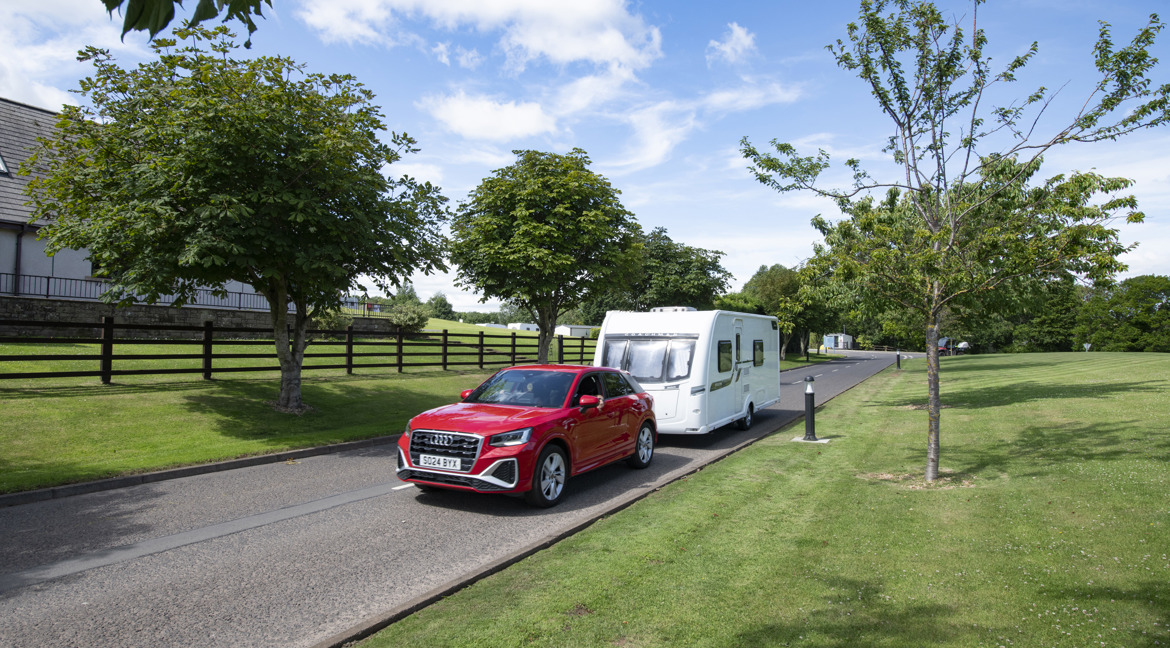
The maximum weight your car can safely tow, including a fully loaded car and caravan, can typically be found in the vehicle’s handbook. If it is not listed, it’s recommended that the fully laden weight of your caravan should be no heavier than 85% of the kerbweight of the tow car.
You can find the kerbweight of your car in the owner’s manual or sometimes on a plate on the door sill. The weight of the caravan should be listed on a plate near the doorframe or in the owner’s handbook. When buying a touring caravan, remember to take the towing vehicle into account and choose a model that’s suitable.
Can I tow a caravan on my licence?
If you received your driving licence before 1st January 1997, you are permitted to drive a car towing a caravan with a combined weight of up to 8,250kg without requiring an additional test.
If you passed after this date, you can only tow a caravan or trailer that weighs up to 3,500kg (known as a ‘category BE’ vehicle). If this limit is exceeded, you’ll need to take an additional category B+E test before towing a caravan.
You can find more information on GOV.UK.
Caravan towing insurance explained
While you’re not legally required to have caravan insurance, it’s certainly a good idea to invest in it, especially if you’re new to touring. Most damage to caravans occurs while towing, usually when drivers misjudge the width of the caravan and collide with gate posts, walls or kerbs, and hundreds of caravans are stolen every year, so having a good insurance plan is a great idea for peace of mind.
There are various types of insurance, and many plans can be customised to suit your lifestyle. It is generally recommended to make sure your insurance includes:
- Loss or damage cover for fire, theft, flood and storm
- Contents cover
- Accidental damage cover for when you’re towing
- A choice of new or for market value
Market value means that your caravan will be insured for how much it’s currently worth, and this is how much you would receive from the insurer. As the caravan ages and the value drops, so will the amount you receive.
With new for old cover, you would receive a brand-new version of the same make and model to replace the damaged or stolen caravan (or the closest equivalent if your model is no longer in production).
What is the speed limit when towing a caravan?
In the UK, you can drive up to 60mph when towing a caravan on the motorway or dual carriageways. On single carriageways, it’s recommended that you do not exceed 50mph. When towing a caravan or trailer, you are also not permitted to drive in the outside lane on 3+ lane motorways.
Best vehicles for towing a caravan
One of the most important things to think about when choosing the right car to tow your caravan is torque, or pulling power. This is a measure of engine performance, with good torque at low engine speeds allowing easy pulling away and towing with a minimum of gear changing. In general, diesel cars tend to perform better here, but hybrids are also very popular and offer less impact on the environment.
A 4x4 drive system offers additional benefits when towing caravans, most notably increasing a car’s kerbweight and providing a smoother drive overall, especially on grass pitches. Some cars feature stability programmes, which use the brakes to tackle any caravan snaking or side-to-side instability. You’ll also benefit from self-levelling rear suspension as this prevents the car from sitting down at the back when it’s heavily loaded and is especially useful if you don’t have a 4x4 drive.
Can electric cars tow a caravan?
Electric cars can absolutely tow a caravan; there are just more things to think about. For example, when stopping to charge your EV, it’s likely you’ll be using a charging point designed for vehicles without a caravan, so you’ll need to find a suitable spot to park your caravan.
There is also the issue of towing draining your EV’s battery at a quicker pace and giving you a reduced range, but it is recommended you take a break every two hours, so this isn’t too much of a problem.
Are passengers allowed in a towed caravan?
Under the Road Traffic Act, it is illegal to allow passengers to ride in a caravan while it is being towed.
There are no exceptions to the rule, even for short distances or slow speeds, and if you’re caught with passengers in a caravan, you could face serious penalties, such as a fine of up to £2,500, six penalty points on your licence, disqualification from driving and even prosecution.
Pre-journey safety checklist
It’s important you check the safety of your caravan before you start towing it for your touring break. Here are our recommended checks to ensure a safe and comfortable trip:
- Your towbar is secure
- The tyre pressure and tread depth on both the car and caravan
- That all lights and brakes are working
- That your car and caravan are properly balanced and not overloaded
- That your towing mirrors are correctly adjusted
- That your suspension sits level
Your wonderful escape awaits
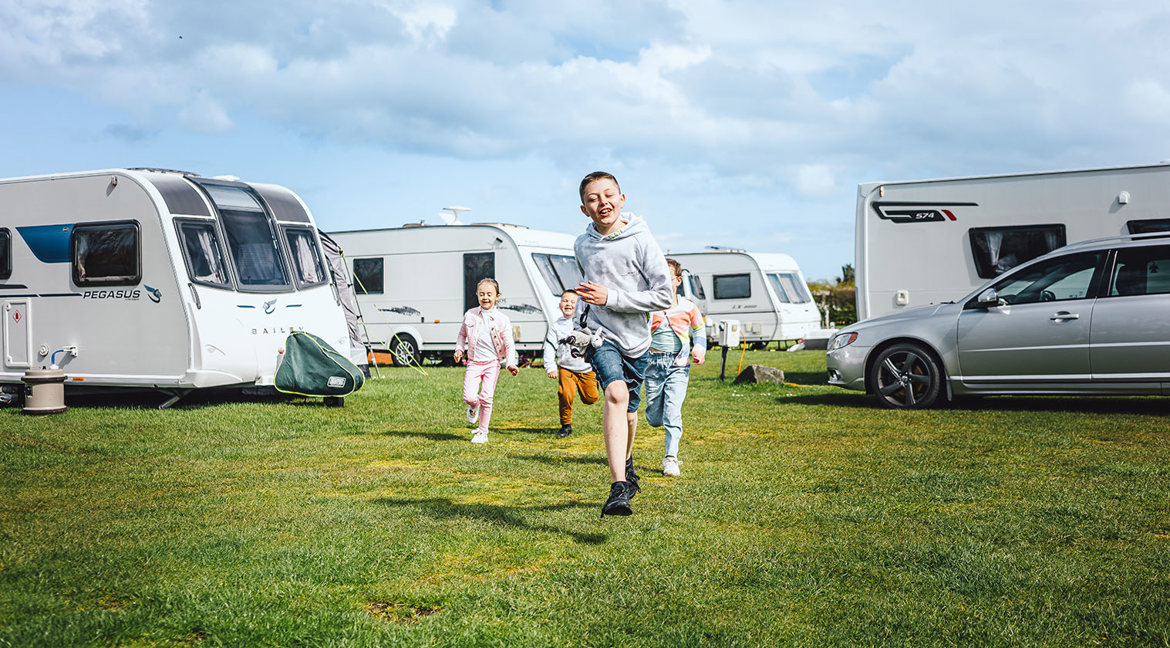
If you’re looking for somewhere to enjoy a touring escape, we offer touring pitches at Riverside, Queensberry Bay, Coldingham Bay and Thurston Manor. With a range of pitch types, access to on-site facilities, the opportunity to bring your own awning and dogs at no extra cost and some truly stunning scenery in Scotland and Northern England, our parks are the perfect spot for your touring break.
Whether you’re after a fun-filled adventure with the family or a few days to sit back and relax amongst nature, you’ll have a wonderful touring break with Verdant Parks.
Get in touch
Our friendly team are waiting to hear from you. Check out our office hours or use the contact buttons below
For any press, media or influencer enquiries, you can contact us by email click here

